

When most people think about bespoke joinery, they picture the finished result. Clean lines, smooth finishes and everything sitting perfectly in place. What you don’t see is the detail behind it, especially tolerances.
A tolerance is simply a small allowance in measurements. It’s the difference between something fitting properly, fitting poorly, or not fitting at all. In bespoke joinery, getting this right is key.
Take a fitted wardrobe as an example. It might be designed to go wall to wall, but in reality, walls are rarely straight or square. Floors can dip and ceilings can be slightly off. If everything was made to exact sizes with no allowance, it wouldn’t fit once it arrived on site.
That’s why experienced joiners build in small adjustments. This could be through scribing panels to walls, leaving slight gaps, or allowing space for final fitting. These details make sure the finished job still looks sharp, even if the room itself isn’t perfect.
Materials also play a part. Timber naturally expands and contracts depending on temperature and moisture. In the summer it can swell, and in the winter it can shrink. If this movement isn’t considered, doors can start sticking or gaps can appear over time. Good joinery accounts for this from the start.
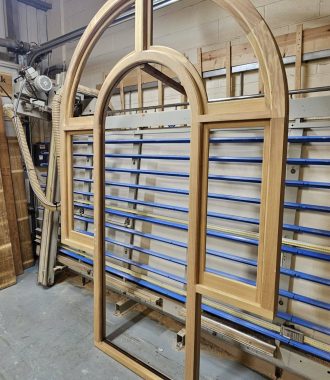
Machining is another factor. Modern machinery can cut very accurately, often within fractions of a millimetre. That level of precision is useful, but only if it’s used properly. There’s no point making something perfectly square if the space it’s going into isn’t. The skill is knowing where to be exact and where to allow flexibility.
Finishing can also affect the fit. Paints and lacquers add a slight thickness to surfaces. It might not sound like much, but on things like doors and drawers, it can make a difference. If it’s not allowed for, parts that fitted fine before finishing can end up too tight.
For customers, tolerances show up in the small details. Doors that close properly, drawers that run smoothly, and consistent gaps that look neat and even. You might not notice when it’s done well, but you will notice when it’s not.
From a business point of view, getting tolerances right saves time and hassle on site. It means less adjusting, fewer problems during installation, and a better end result.
In bespoke joinery, it’s not about chasing one perfect measurement. It’s about managing small variations so everything works together properly. That’s what gives you a clean, professional finish that lasts.